


Introduction
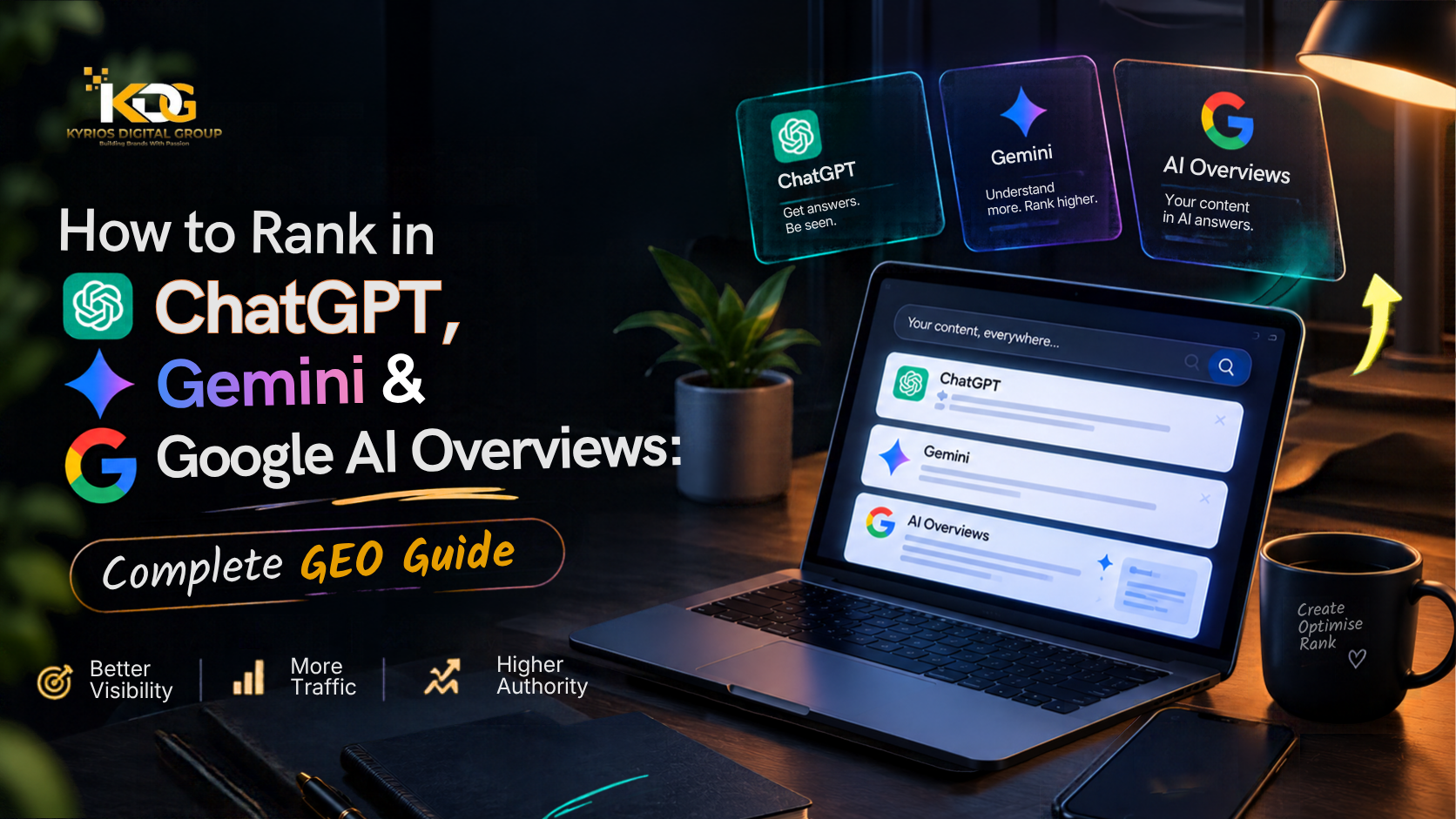
Think about how the landscape for information discovery is changing. In the old days you’d go to Google, type in a query and then trawl through a number of sites to find the information you were after. Today you might go to ChatGPT to ask a question, Google Gemini to get an explanation and Google AI Overviews to get the overview.
The shift creates opportunities but also poses the question of how you can help your site get found when the user will never actually visit your site to find the information they’re looking for.
GEO is about optimising your content so that it’s easier for AI platforms to find, understand and potentially cite when answering a question. It’s not a substitute for SEO but is very much based on the same principles with a view to how people are going to be discovering information via AI.
What is Generative Engine Optimisation (GEO)?
Generative Engine Optimisation (GEO) is the process of optimising your content in such a way as to increase the chance that AI platforms will understand and potentially reference your content when responding to a query. These are the platforms: ChatGPT, Google Gemini and Google AI Overviews. They all work in slightly different ways but in each case the aim is to use information to better answer a user’s query.
GEO isn’t about cramming your site full of content with keywords and publishing loads of AI-generated articles. It’s about sharing information that’s of value to people and which in turn builds trust in the brand.
GEO vs SEO vs AEO: What’s the difference?
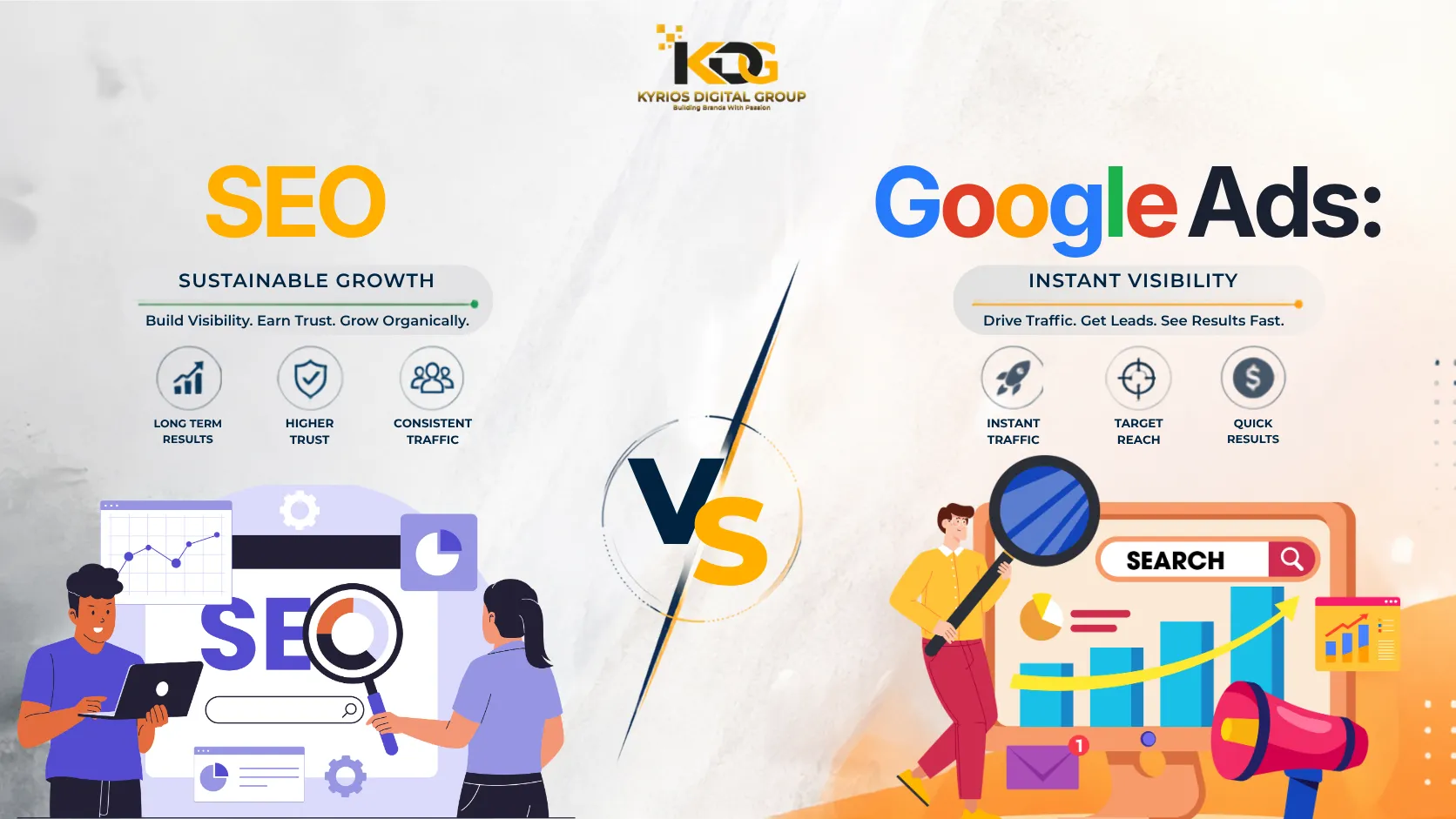
SEO (Search Engine Optimisation) is about improving the discoverability of your site in search results via relevant content, technical improvements and backlinks. GEO (Generative Engine Optimisation) is all about increasing the chances that your content or brand will be referenced in AI generated answers.
AEO (Answer Engine Optimisation) is all about answering the question clearly. It’s about being able to answer the question that might be asked in a featured snippet, in a voice search or in any of the other answer-based search experiences. SEO, AEO and GEO can all work together to get your site in front of more people via a range of search experiences.
Read More :- What is Digital Branding?
How ChatGPT, Google Gemini and Google AI Overviews Work
ChatGPT
ChatGPT can answer questions based on its existing knowledge base and in some cases (depending on the version and settings) will search the web for up to date information. When it does search the web it may include links to the sources it has used to form its answer, which can be a way of attracting attention where the content is relevant to the user’s query. To get your content considered then it’s all about answering the question clearly and making sure the relevant pages on your site are accessible to the right crawler.
Google Gemini Google Gemini can explain things, answer questions and pull in information from a variety of sources. The way in which it uses the web depends on the specific feature and the question that’s being asked.
Google AI Overviews
Google AI Overviews are now appearing for certain queries. These are AI-generated summaries which appear in Google Search itself, giving a summary of the topic and then linking out to relevant websites so that the user can find the information they’re looking for without having to go through several pages.
However it’s by no means the case that if you rank well in Google Search you’ll necessarily be included in an AI overview (the sources shown can vary from search to search and the information available).
What does this mean for your website?
Although each platform operates in its own way there are a few key things that are important to bear in mind: your content has to be worth reading. You have to be able to explain something clearly, you have to be able to back up a claim and you have to make it easy for the user to find what they’re looking for.
Your site has to be technically accessible as well. Those are the sorts of things that will improve your chances of your site being picked up, though no GEO strategy will guarantee you a mention or a citation.
Read More :- How to Optimize for AI Overviews, ChatGPT, and Google’s Search Generative Experience
How to Improve Your Visibility in ChatGPT
Get to the point. Answer the question up front in your article and then go on to explain it further.
Use headings. Structure your article in a way that makes sense so that users can easily find the information they’re looking for. Include evidence. Add statistics, references, original research or examples from your own experience.
Check your website access settings. Look at OpenAIs official crawler and see if your robots.txt file or some other form of access control is preventing the crawlers that you’d like to be able to access your Site. Build your brand beyond your website. Make sure your business details are accurate and work to get yourselves mentioned in relevant publications and industry sites. Focus on helping people solve problems and let the structure and clarity of your content help with discoverability.
How to Improve Your Chances of Appearing in Google Gemini Show your experience
People are more likely to trust the content if they know who’s behind it and why that person is in a position to speak about the subject. Include author information, explain your own experience and use real examples to make your advice more relevant. The practical detail will make your article more useful than a page of generic statements.
Keep your content up to date There’s always a degree of change in certain areas (tech, digital marketing, pricing, regulations etc). An article that was accurate last year may well contain some rather out of date advice this year. It’s worth checking the pages regularly and updating any information that is no longer correct.
Make your brand information consistent Ensure that your information (business name, contact details, services, key information etc) is accurate and consistent across your website and on all the relevant third party directories. Inconsistencies can be very confusing to the customer and can make it difficult to work out which is the correct business.
Explain things clearly Don’t go in and fill your content with jargon where a plain simple explanation would be perfectly adequate. If you’re talking about a topic then explain any unfamiliar terms and use examples to make it all as easy to understand as possible. The end game is to produce content that is clear, verifiable and useful.
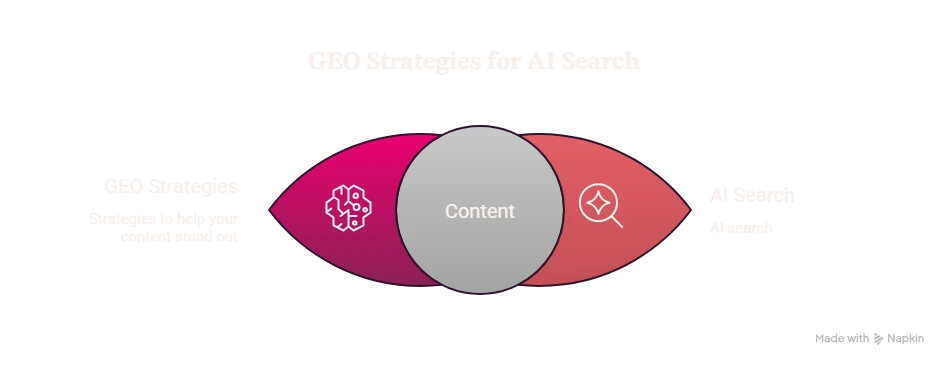
10 GEO Strategies to Help Your Content Stand Out in AI Search
1. Answer Questions Directly
Have you ever opened an article looking for an answer and then scrolled down a few paragraphs to find it? Your readers may have had that experience. Put the answer up front in your relevant section, then go on to provide the examples, the explanation and the supporting detail. A direct answer to the reader’s question is the most respectful thing you can do and makes the article far more accessible.
2. Cover the topics in depth
An article should answer the primary question and deal with the other questions that people are likely to have. That doesn’t mean that every article has to be a thousand words long. The key thing is that it addresses the subject matter, without going into any irrelevant detail. Think about what your reader needs to know in order to understand before they can go any further and structure your article around that.
3. Demonstrate Expertise
The web is saturated with articles giving the standard advice. What will set yours apart is the experience and evidence that underpins it. Use data, use credible sources, use real examples and insights from your own experience wherever you can. Specificity and honesty are more valuable than trying to make every statement sound clever.
4. Share Original Insights
If your article is just rehashing information that’s out there on dozens of sites then there’s really no reason for anyone to remember your brand. Look at ways you can add something to your content. Share some research, some customer case studies, some survey results, some project experience, some of your own observations about what’s going on in the industry. Original insight makes your content more valuable and more useful.
5. Make content easy to navigate
Break your articles up into sections, use headings, short paragraphs and bullet points where appropriate. Bullet points are useful for explaining a point, tables can be useful for comparisons and numbered lists are ideal for step by step instructions. The point is to make the information easier to follow, not to just add in all the formatting because some SEO checklist tells you to.
6. Create Useful Internal Links
Internal links help the user to go from one page to another without having to search your site again. The anchor text should explain what the user will find when they click the link and the page it’s linking to should be relevant to the subject matter. Internal links also help the search engines to discover your pages and to understand how your pages are linked together.
7. Earn genuine industry mentions
Your website is just one element of your online presence. You’ll also be discovered via industry publications, via communities, via expert interviews and on other reputable sites. You can build your presence by sharing your research, writing some useful commentary, working with relevant experts or simply publishing content that people will want to reference.
8. Keep Information Updated
An old article can go out of date and lose its value even if it was a good article when you first published it. Check the content (especially the pages that talk about changing tools, prices, stats, regulations and soon). Update the references where appropriate and add in any new information that would be useful.
9. Maintain a healthy website
Content alone won’t fix all your visibility issues. If your site has problems then certain key pages may be difficult for search engines to get to or index. You need to check your site’s crawlability, indexing, mobile usability, page performance, internal linking and site structure.
It’s also worth having a look at your robots.txt file to ensure you haven’t inadvertently blocked any pages or any of the relevant crawlers. If you’re using JavaScript to display content then make sure that that content is accessible and renderable.
10. Measure Your Results
Publishing content is part of the job. You also need to be able to assess whether your efforts are having an impact. Track search traffic, AI related citations, brand mentions, referral traffic and conversions. Don’t just look at the traffic figures. An increase in traffic is good. It’s the increase in traffic that leads to people finding useful information and taking action that’s the real measure of success.
How to Optimize Content for Generative AI Search
Start with the user’s need and build the page around that. Once you know what the purpose of the page is then you can go on to make the content easy to follow. Define any terms, use examples where they are useful and back up any key claims with appropriate sources. It’s also worth reading through the article before you publish it. Does each section add something? Are you just rehashing the same advice in different words? Can a paragraph be pared down without losing the information?
These little edits can make a difference to the reading experience.
1. Technical SEO Best Practices for GEO
Maintain a clear site structure Organise your site so that people can easily see where the information is. Use categories, descriptive URLs and internal links to relevant pages. Don’t make it difficult for people to find the information you have.
2. Check Crawler Access
Check your robots.txt file and any other relevant access settings to ensure you’re not inadvertently blocking any crawlers that you’d like to allow. Different platforms use crawlers for different purposes so it’s worth checking the relevant official documentation prior to making any changes. Allowing a crawler access to your site doesn’t in itself guarantee that your content will be included in an AI generated answer. It just removes one of the potential barriers to discovery.
3. Build connections Between Topics
If your site is covering a number of related topics then structure them in a way that makes sense to the visitor. Each page should have a purpose and the links between them should allow the visitor to go on and discover more of the subject.
4. Use Clear HTML Headings
Headings help the reader to understand the structure of the article. A main heading followed by appropriate subheadings. Keep the headings descriptive. Make sure the content that follows each heading lives up to the promise of that heading. There’s no need to stuff keywords into every heading.
Clarity is key. Make key pages accessible. Ensure that the important pages can be crawled and indexed (where appropriate). Look out for links, unnecessary redirects and the like which could impact discoverability. Also ensure the site works OK on devices and that people can in fact get the information they’re looking for.
How to Track Your GEO Performance
AI citations: Search for your questions in ChatGPT, Gemini and the Google AI Overviews. See if your site comes up as a source or as a linked result. Brand mentions: Note when your business, products, or services show up in AI-generated answers, even if there is no link.
Referral traffic: Check your analytics reports for visits from AI tools and conversational search platforms (where referral data is available). Organic search performance: Use Google Search Console to look at impressions, clicks, click through rates and the queries that are bringing people to your site.
Conversions:
Track enquiries, sign-ups, purchases and other relevant actions, from traffic and identifiable AI-related referral sources. For a useful picture of the situation, just keep repeating your checks with the same set of questions. Note which platform you’re testing on, the date, the query and whether or not your brand was mentioned/cited Remember the results can vary from session to session. These checks are indicative of visibility rather than a complete measure of all AI interactions.
Read More :- What Are Local Citations and Why They Are Important to Your Business
GEO vs Traditional SEO: Which strategy works best?
Traditional SEO helps people find your site in search results. GEO is about increasing the likelihood that your brand or content will be mentioned in AI-generated responses. Both of them benefit from good content, clear information, good site performance and a credible online presence.
The key point is not to abandon our established SEO practices just because new search tools are getting the spotlight. Improve your content, understand your audience, build your brand’s reputation and monitor the results across the board. That’s the way to have a well-rounded approach to search as it continues to develop.
The Future of GEO: What to Expect
AI powered search is moving on very quickly. Companies will need to keep on adapting as new features and search behaviours come and go. One thing to watch is the increasing importance of information. As more and more websites are publishing AI-generated content, the value of practical experience, original research and the kind of useful observation that actually adds something will go a long way to differentiating one site from another.
Trust will also be key. The reader has to know that the information is accurate, who the information comes from and whether that person or organisation has any real experience of the subject matter. Clear authorship and reliable references can go a long way to building that trust.
Another area to keep an eye on is measurement. As AI search platforms and the analytics tools that go with them get better, businesses may well end up with ways of working out how often their brand appears in AI-generated responses and whether those responses lead to visits to their site or to sales. However the details will be down to how each platform changes. It’s better to just keep an eye on the updates rather than base your entire plan on some supposed tricks you can use to get higher in the rankings.
Conclusion
Getting your site in the ChatGPT, Google Gemini and Google AI Overviews doesn’t mean you need a new approach to digital marketing. Start with the fundamentals. Work out what your audience actually want to know, create content that answers their questions and back that advice up with information and real experience.
Make your site easy to find, link to relevant pages, keep your key information up to date and build genuine relationships with other sites and industry figures. Use SEO techniques with a clear GEO strategy and your business will be well placed to adapt to the new search landscape and find more ways of connecting with the right people.