

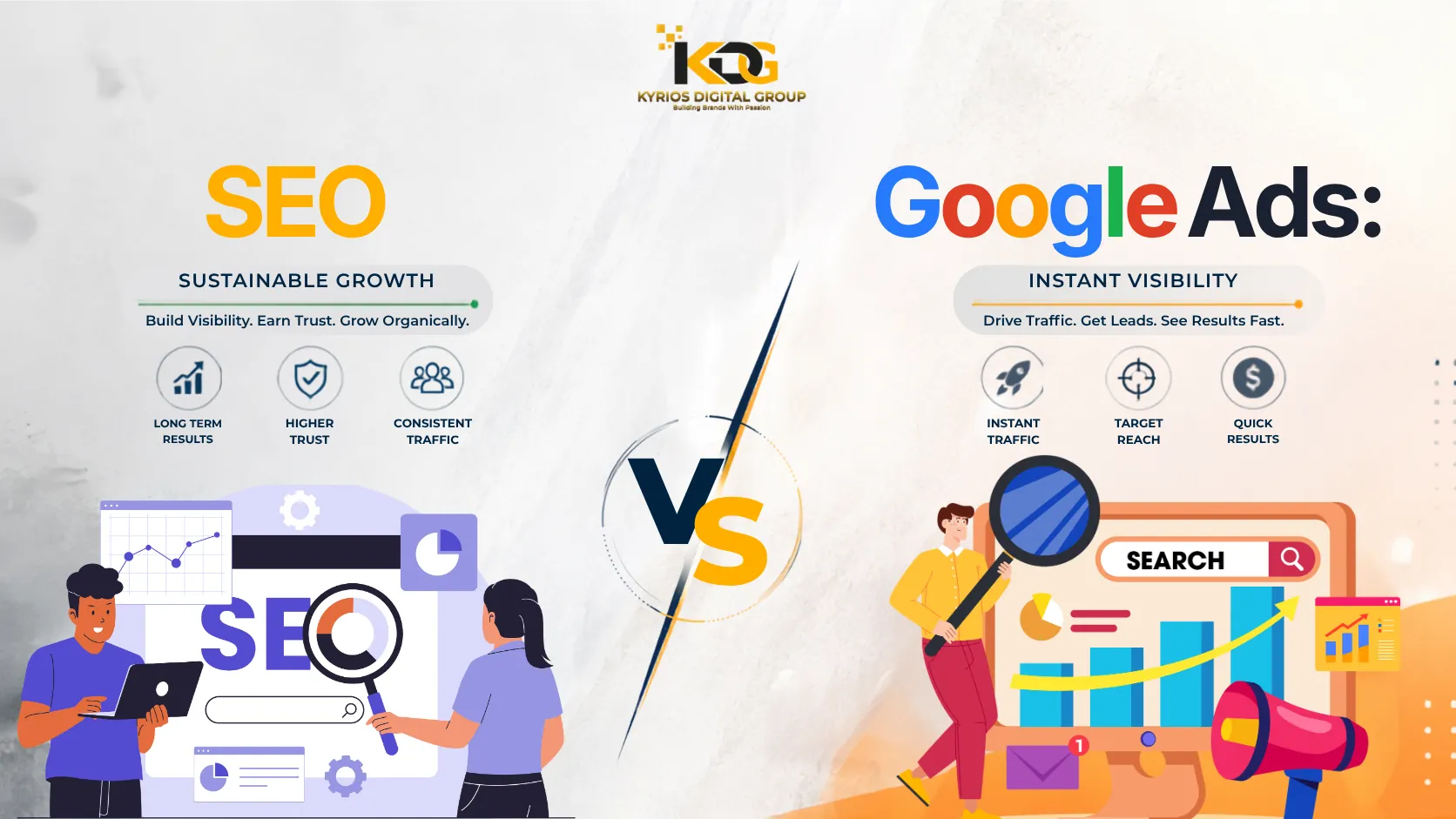
Every business wants to reach more people online, attract more visitors to its website, and turn those visitors into customers. But when it comes to digital marketing, one question comes up again and again: should you focus on SEO or invest in Google Ads?
Both strategies can help your business grow, but they work in different ways. SEO is a long-term approach that improves your website’s visibility in search results and brings in organic traffic over time.
It takes patience, but the results can be consistent and cost effective in the long run. Google Ads, on the other hand, is designed for speed. Paid search campaigns can place your business in front of potential customers almost immediately, making them a popular choice for businesses looking for quick results.
Choosing between the two isn’t always straightforward. The best option depends on factors such as your budget, business goals, industry competition, and how quickly you need to see results. A new startup trying to generate leads quickly may have different priorities than an established business focused on long-term growth.
If you’re trying to decide where to invest your marketing budget, this guide will help you make an informed choice. We’ll explain how SEO and Google Ads work, compare their strengths and limitations, and look at the situations where each strategy performs best. You’ll also learn when combining both approaches makes the most sense, so you can choose the right digital marketing strategy for your business in 2026.
What is SEO?
Search Engine Optimization (SEO) is improving a website so it appears higher in the organic (nonpaid) search results on various search engines . Instead of paying for every visitor, SEO helps you attract traffic by making your website more relevant, useful, and easy for both users and search engines to understand.
A successful SEO Services combines quality content, technical improvements, and a positive user experience. While it doesn’t produce overnight results, it can become one of the most reliable sources of long-term website traffic.
How SEO Works
SEO isn’t a onetime task—it’s an ongoing process that involves improving different aspects of your website to help it perform better in search results. Some of the key activities include:
Finding the keywords your target audience is actively searching for.
Creating helpful, original content that answers users’ questions.
Optimizing page titles, headings, meta descriptions, and other onpage elements.
Improving technical factors such as site speed, mobile responsiveness, etc.
Earning backlinks from reputable and relevant websites to build authority.
Optimizing your business for local searches through Local SEO.
Tracking performance and updating content regularly to keep it accurate and competitive.
Since search engines frequently refine their ranking algorithms, SEO requires regular monitoring and continuous improvements to maintain strong performance.
Read More:- SEO for Shopify: The Ultimate Guide to Higher Rankings
Benefits of SEO
When implemented consistently, SEO offers several long-term advantages for businesses of all sizes.
Brings in a steady flow of organic visitors.
Helps build credibility and trust with potential customers.
Increases your website’s visibility for relevant search terms.
Supports sustainable business growth without relying entirely on paid campaigns.
Strengthens your content marketing efforts by making valuable content easier to discover.
Generates traffic even after content is published and optimized.
Expands brand awareness by helping your website appear across a wider range of searches.
Pros and Cons of SEO
| Pros | Cons |
| Delivers long term traffic without paying for every click. | Results usually take time and patience. |
| Builds stronger trust because users often view organic results as more credible. | Requires ongoing optimization and content updates. |
| Can provide an excellent return on investment over time. | Ranking for highly competitive keywords can be challenging. |
| Supports steady, sustainable business growth. | Search engine algorithm changes can affect website performance. |
What Is Google Ads?
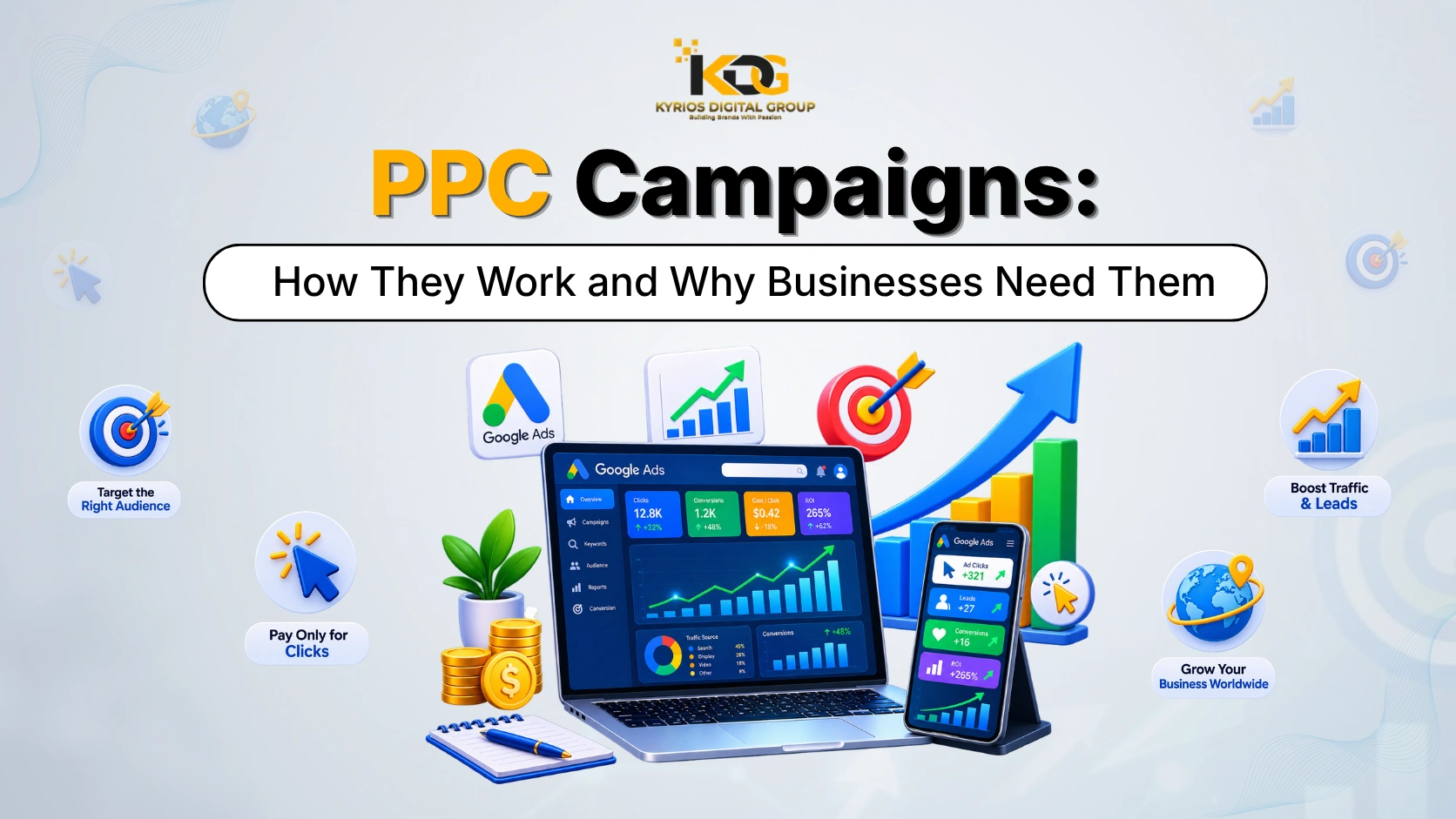
Google Ads is Google’s online advertising platform that enables businesses to promote their products or services directly on Google Search and other Google-owned platforms. Instead of relying on organic rankings, businesses can pay to have their ads appear at the top of search results for specific keywords, often within hours of launching a campaign.
Most campaigns use a pay-per-click (PPC) model, which means you only pay when someone clicks on your ad. The amount you pay per click depends on several factors, including keyword competition, your ad’s quality score, and the maximum bid you’re willing to set.
How Google Ads Works
Google Ads uses an auction system to determine which ads appear for a particular search. While several factors influence the outcome, a typical campaign follows these steps:
Choose the keywords you want your ads to target.
Write that encourages users to click.
Set a daily or monthly advertising budget.
Define your target audience based on factors like location, demographics, or interests.
Launch your campaign and let Google match your ads with relevant searches.
Pay only when someone clicks .
Track campaign performance and make regular adjustments to improve results.
Read More :- How Can Remarketing Boost Your Revenue
Benefits of Google Ads
One of the biggest advantages of Google Ads is its ability to deliver results quickly. Businesses can start reaching potential customers almost immediately after a campaign goes live.
Drives traffic to your website without waiting for organic rankings.
Helps generate leads and sales quickly.
Reaches people who are actively searching for your products or services.
Offers flexible budget options that can be adjusted at any time.
Provides detailed performance data to measure return on investment.
Makes it easy to test different headlines, descriptions, and landing pages.
Works well for product launches, seasonal promotions, and limited time offers.
Supports precise geographic, demographic, and audience targeting.
Pros and Cons of Google Ads
| Pros | Cons |
| Delivers immediate visibility in Google search results. | Traffic stops as soon as your advertising budget runs out. |
| Allows highly targeted advertising based on user intent. | Cost per click can be expensive in highly competitive industries. |
| Makes it easy to test new products, services, and marketing messages. | Campaigns require ongoing monitoring and optimization. |
| Gives you full control over your advertising budget. | Poorly managed ads can consume your budget without producing strong results. |
| Provides detailed insights to help improve campaign performance. | Long-term advertising costs can become significant compared to organic marketing. |
SEO vs Google Ads: Key Differences
Choosing between SEO and Google Ads becomes easier when you understand how they differ across important business factors. While both strategies help increase website traffic and improve search visibility, they operate in completely different ways. SEO focuses on improving your website’s position in organic search results through continuous optimization, whereas Google Ads uses paid search advertising to place your business at the top of search results almost instantly. The right option depends on your budget, marketing goals, and how quickly you need results.
Cost
One of the biggest differences between SEO and Google Ads is the cost structure. SEO requires an upfront investment in content creation, Technical SEO, website optimization, and link building efforts. Although it may take time to see results, you don’t pay for every visitor who clicks on your website. Google Ads, however, follows a pay-per-click (PPC) model, meaning you pay each time someone clicks your ad. The Cost per click (CPC) varies depending on your industry, competition, and keyword targeting.
Traffic
SEO generates organic traffic by helping your website rank naturally on search engines. Once your pages begin ranking well, they can continue attracting visitors consistently without additional advertising costs. Google Ads drives paid traffic through sponsored listings, allowing businesses to reach potential customers immediately. This traffic continues only if your advertising budget remains active and consistent.
Time to Results
SEO is a long-term strategy that typically takes several months before noticeable improvements appear in search engine rankings. The exact timeline depends on competition, website authority, and the quality of your optimization efforts. Google Ads delivers much faster results, often generating website traffic and leads within hours after launching a campaign, making it ideal for businesses seeking immediate visibility.
Return on Investment (ROI)
When comparing ROI, both strategies offer value in different ways. Google Ads often provides quicker returns because businesses can start generating leads immediately. SEO, on the other hand, usually delivers a stronger long-term return on investment because successful pages continue bringing in organic traffic without ongoing click costs. Businesses focused on sustainable growth often see greater overall value from SEO over time.
Trust and Credibility
Users generally place more trust in organic search results than paid advertisements. Websites that rank naturally are often viewed as more authoritative and reliable because they have earned their position through relevance and quality. While Google Ads offers excellent visibility, some users prefer to skip sponsored listings and click on organic results instead.
Sustainability
SEO creates long-lasting results when maintained properly. Even after achieving strong rankings, a well-optimized website can continue generating traffic with regular updates and improvements. Google Ads is less sustainable because visibility depends entirely on your advertising budget. Once the campaign is paused or the budget is exhausted, your ads stop appearing and traffic usually declines immediately.
Click Through Rate (CTR)
Both SEO and Google Ads can achieve strong clickthrough rates, but performance depends on different factors. High ranking organic pages often receive significant clicks because users trust organic listings. Google Ads can achieve excellent CTR when advertisements are well written, relevant, and supported by effective keyword targeting. The outcome largely depends on search intent, competition, and the quality of your optimization.
Maintenance
Both SEO and Google Ads require ongoing management, but the type of maintenance differs. SEO involves updating content, improving Technical SEO, monitoring search engine rankings, and adapting to algorithm changes. Google Ads requires continuous campaign optimization, bid adjustments, budget management, ad testing, and performance analysis to maintain strong results and improve conversion optimization.
Overall, the difference between SEO and Google Ads comes down to balancing immediate results with longterm growth. SEO is a strategic investment that builds lasting online visibility and consistent organic traffic, while Google Ads offers quick exposure and faster lead generation through paid campaigns. For many businesses, combining both strategies creates a more effective and balanced digital marketing approach.
Read More :- How Long Does it Take to Rank #1 on Google Map?
SEO vs Google Ads: Detailed Comparison
Cost Comparison
Budget is often the deciding factor when comparing Google Ads vs SEO. SEO generally requires investment in content creation, website optimization, and ongoing improvements rather than paying for every visitor. While the initial effort may seem significant, the cost per visitor often decreases over time because successful pages continue attracting organic search results without additional click charges.
Google Ads operates on a pay-per-click model. Every click comes with a cost, and competitive industries may experience a high Cost per click (CPC). Although businesses can control daily spending, traffic usually stops once the advertising budget is exhausted.
For businesses planning long-term growth, SEO is usually more cost effective. However, companies needing immediate exposure often find Google Ads worth the investment despite the ongoing costs.
Speed of Results
One of the biggest differences in the SEO vs Google Ads debate is how quickly they deliver the results. If your business needs immediate visibility, Google Ads has a clear advantage. A well-optimized Google Ads campaign can start driving visitors to your website within a few hours of launching. This makes it an excellent choice for product launches, seasonal promotions, limited time offers, or businesses entering a competitive market.
SEO, however, is a long-term investment. Improving search engine rankings takes time because search engines evaluate content quality, website authority, technical performance, and user experience before rewarding higher positions. Depending on your industry and competition, noticeable improvements may take several months.
If priority is speed then Google Ads is the clear winner. If you’re willing to invest time for lasting results, SEO becomes the stronger option.
Long Term Growth
When comparing SEO vs Google Ads for long-term growth, SEO consistently offers greater value. As your website gains authority and ranks for more keywords, it continues attracting organic traffic without requiring payment for every visitor. High quality content, Technical SEO improvements, and regular updates help maintain and even improve rankings over time.
Google Ads can certainly support business growth, but it depends on continuous advertising spend. The moment a campaign is paused or the budget runs out, visibility and traffic typically decline.
For businesses focused on building a strong online presence that lasts for years, Search Engine
Optimization vs Google Ads is not a close contest. SEO provides a stronger foundation for sustainable growth, while Google Ads is better suited for achieving short-term marketing goals.
Lead Generation
Generating qualified leads is essential for every business, but SEO and Google Ads approach this differently. SEO generates leads by attracting users who are actively searching for answers, products, or services through organic search results. Because users often trust organic listings, these visitors tend to spend more time exploring the website before making a decision.
Google Ads reaches potential customers immediately by placing advertisements at the top of search results. Businesses can target specific keywords, locations, devices, demographics, and customer interests, allowing them to reach people who are ready to take action.
SEO works well for consistently generating leads over time, while Google Ads excels at capturing high-intent customers who are prepared to buy or inquire immediately. Many businesses use both channels together to maximize lead generation throughout the customer journey.
Brand Awareness
Strong brand recognition plays a significant role in business growth, and both SEO and Google Ads contribute in different ways.
SEO improves brand awareness by helping your website appear for multiple relevant search queries. As users repeatedly see your website in search engine rankings, they begin recognizing and trusting your brand. Publishing informative blogs, guides, and service pages also positions your business as an authority in your industry.
Google Ads increases visibility almost instantly by displaying advertisements at the top of Google Search Ads. Even when users don’t click the ad, repeated exposure can improve brand recall and familiarity.
If your goal is long-term authority and credibility, SEO offers greater benefits. If you’re promoting a new business, product launch, or limited time campaign, Google Ads can quickly increase brand exposure.
Conversion Rate
Conversion rates depend on several factors, including landing page quality, user intent, and conversion optimization. SEO attracts visitors who are researching and comparing options. While some users convert
immediately, others may take time before making a purchase or contacting the business. Creating content that answers customer questions helps move users through the buying journey.
Google Ads often targets users with stronger purchase intent. Since advertisers can bid on highly specific keywords and direct visitors to optimized landing pages, conversion rates can be very strong when campaigns are properly managed.
Neither strategy guarantees higher conversions on its own. Businesses that invest in quality landing pages, relevant content, and effective conversion optimization generally achieve the best results regardless of the traffic source.
ROI Comparison
Return on investment is one of the most important considerations when deciding between SEO or Google Ads. SEO usually delivers a higher ROI over the long term because the traffic continues even after the initial optimization work. Once pages rank well, they can generate leads and sales for months or years with regular maintenance. Although SEO requires patience, the long-term value often outweighs the upfront investment.
Google Ads provides measurable ROI much faster. Businesses can monitor impressions, clicks, conversions, and revenue almost immediately. However, maintaining those results requires continuous spending, making long-term costs significantly higher.
For businesses seeking immediate revenue, Google Ads often provides quicker returns. For those focused on sustainable profitability and consistent organic traffic, SEO generally offers better long-term ROI.
When Should You Choose SEO?
SEO is the right choice when your business wants to build lasting online visibility and reduce dependence on paid advertising. Although results take time, the longterm benefits make it a valuable investment for many companies.
Best Use Cases
Businesses planning longterm growth.
Companies looking to increase organic traffic.
Brands wanting stronger search visibility.
Websites publishing regular content.
Businesses aiming to build trust and authority .
Organizations investing in content marketing.
SEO vs Google Ads: Which Is Better for Small Businesses?
For small businesses with limited budgets, choosing between SEO vs Google Ads can be challenging. The answer depends on both short-term and long-term objectives.
SEO is often the better investment for businesses looking to establish a strong online presence over time. It helps improve search engine rankings, increases organic traffic, and reduces ongoing customer acquisition costs. While it requires patience, it creates lasting value.
Google Ads, on the other hand, is useful for businesses that need customers quickly. A carefully managed campaign can generate leads almost immediately, making it valuable for new businesses or those promoting timesensitive services.
Many small businesses achieve the best results by combining both strategies. Google Ads provides immediate visibility while SEO gradually builds sustainable traffic and long-term authority. This balanced approach supports steady business growth without relying entirely on paid advertising.
Can SEO and Google Ads Work Together?
Yes. In fact, many successful businesses use SEO and Google Ads together because each strategy complements the other. Rather than viewing it as SEO vs Paid Ads, it’s often more effective to treat them
as two parts of the same online marketing strategy.
SEO builds a strong foundation by improving your website’s search visibility and attracting consistent organic traffic. At the same time, Google Ads helps you reach potential customers immediately, especially for competitive keywords or time sensitive campaigns.
Here are some ways both strategies can work together:
Use Google Ads while waiting for SEO to improve rankings. Target highly competitive keywords through paid campaigns and less competitive ones through SEO. Use Google Ads data to identify high-performing keywords for SEO content. Retarget visitors who first discovered your website through organic search.
Test landing pages using paid campaigns before investing in long-term SEO content. Increase overall visibility by appearing in both paid and organic search results.
Businesses that combine SEO and Google Ads often gain better brand visibility, more qualified traffic, and stronger long-term marketing performance.
Read More :- Content Optimization Made Easy – A Complete Engagement Guide
Ignoring Local SEO
Failing to update old content regularly.
Not testing different ad copies and keyword targeting.
Treating SEO and Google Ads as competing strategies instead of complementary strategies.
Avoiding these mistakes can help you improve search visibility, generate more qualified leads, and maximize your marketing investment.
Conclusion
The debate around SEO vs Google Ads doesn’t have a universal winner because the right choice depends on your business objectives, budget, competition, and growth timeline. If your priority is building long-term authority, improving search engine rankings, and generating consistent organic traffic, investing in Search Engine Optimization is the smarter decision. Although it requires patience and continuous optimization, the long-term benefits often outweigh the initial effort.
If your business needs immediate website traffic, quick lead generation, or fast visibility for promotions and new product launches, Google Ads provides an effective solution. It allows you to reach your target audience quickly through paid search advertising, but ongoing investment is required to maintain results. For most businesses in 2026, the strongest approach isn’t choosing between SEO or Google Ads—it’s using both strategically.
SEO creates a sustainable foundation for future growth, while Google Ads delivers immediate opportunities to generate leads and sales. Together, they create a balanced digital marketing strategy that supports both short-term performance and long-term success. Before making your decision, evaluate your goals, available budget, and expected timeline. A thoughtful combination of both channels can help improve search visibility, strengthen brand awareness, and drive consistent business growth in an increasingly competitive online marketplace.